Craft, Science, and the Future of the Custom Home: Notes from Bond Custom 2026
Edward Twohey on
Nov 03, 2026
The most useful thing I heard at this year's Bond Custom conference wasn't about a product. It was about our clients.
In one of the opening seminars, an owner's representative from Post Projects Holly-Mae Post made a point that has stayed with me: today's ultra-wealthy clients are increasingly detached from traditional craft and process. Many of them live in a world of technology, AI, performance, and metrics. They know what a building should do, but have had little exposure to how great buildings are made.
That puts a responsibility on us. Our job isn't only to design and document a house. It's to bring passion to the process and give clients an enriching experience of art and architecture. In my experience, when clients understand the craft, they value it, and they're more willing to invest in it.
That theme ran through the whole week.
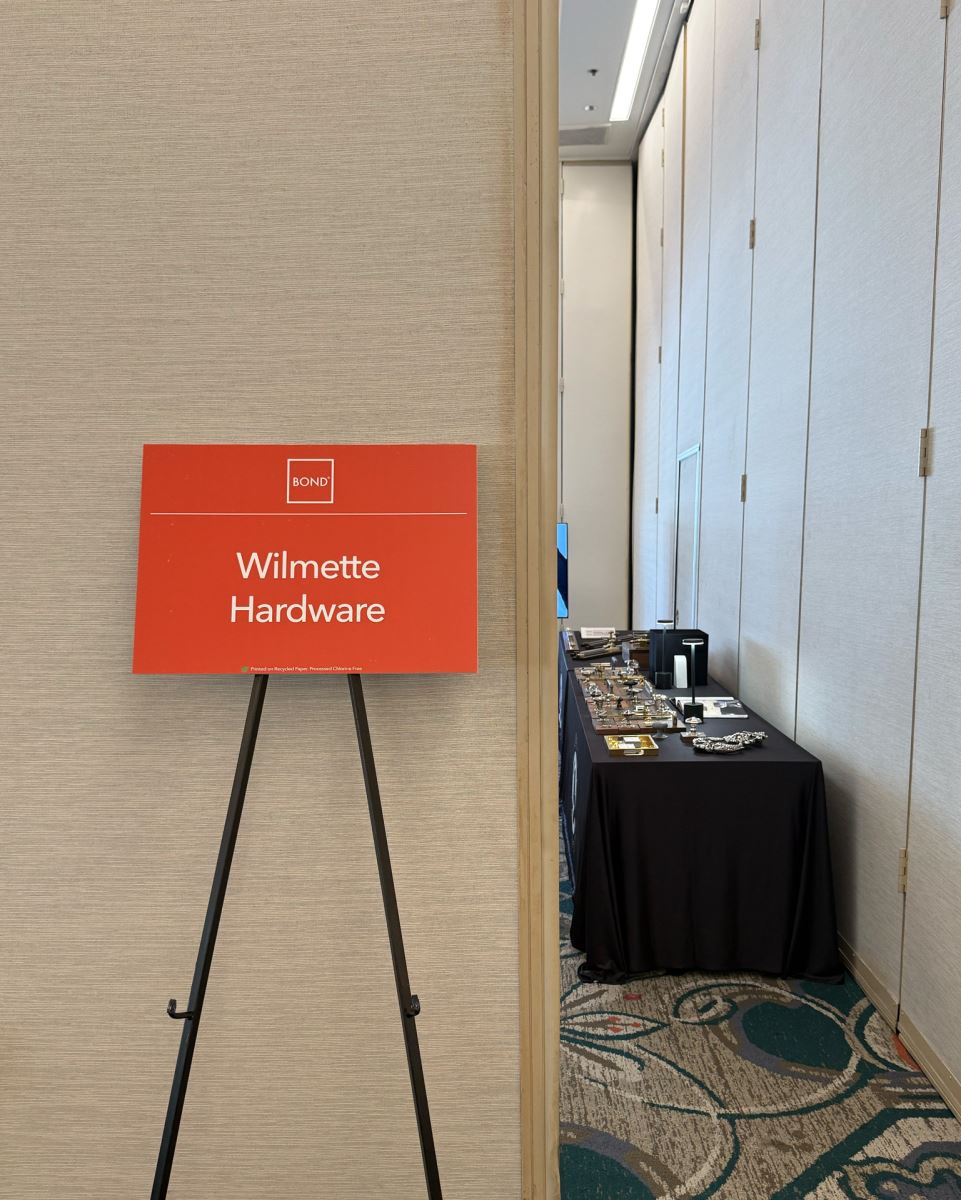
What Bond Is
Bond Custom, held this year October 22–25 at La Quinta Resort & Club near Palm Springs, is an invitation-only event for custom residential architects. Instead of a trade show floor, it's built around scheduled, sit-down meetings with vendors and suppliers, plus a series of seminars on design, building technology, and practice. The format allows real conversation: I could bring photos of our own projects to the table and talk through actual detailing problems with the people who make the products. I first wrote about Bond in 2019, and the event remains one of the most valuable two days of my year.
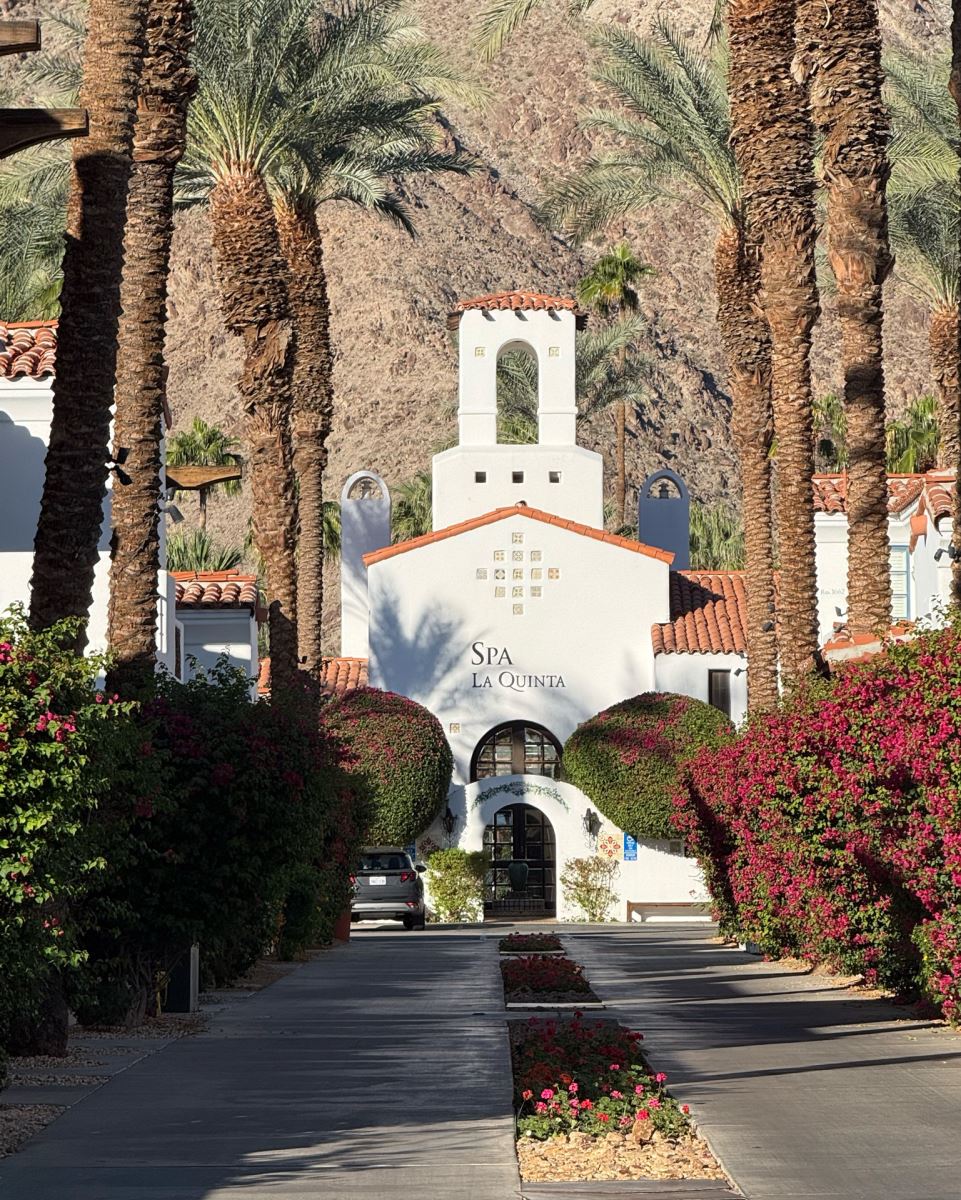
Morning at La Quinta, between meetings.
Palm Springs Modernism
Before the conference began, Bond offered a bonus architectural bus tour of Palm Springs, led by Michael Stern of The Modern Tour. Michael is co-author, with architectural historian Alan Hess, of Julius Shulman: Palm Springs and Hollywood Modern: Houses of the Stars, both from Rizzoli. I learned a lot about the city and its architecture.
A highlight was seeing, from the street, the Kaufmann House by Richard Neutra. The Kaufmann family is the same family that commissioned Frank Lloyd Wright to design Fallingwater in Pennsylvania. In Palm Springs they turned to Neutra, one of the great California modernists, and the result is quite sublime. The visit had a personal connection for me: Julius Shulman, whose photographs of Neutra's houses helped make both men famous, also photographed Chicago's mid-century modern homes for Julius Shulman: Chicago Mid-Century Modernism, a book produced by my friend and former client Gary Gand.
We also passed the former homes of Elizabeth Taylor, Dinah Shore, Kirk Douglas, and William Holden, whose house was particularly gorgeous. For me, the draw wasn't the celebrity connections but the architecture itself. Palm Springs modernism is understated, or as Michael puts it, "discreet to the street": mostly one story, strongly horizontal, and crisp, with thin, beautiful lines throughout.
[PHOTO NEEDED: Kaufmann House, Palm Springs]
The Science Behind the Walls
Michael Kramer of RDH Building Science gave a seminar titled "Start Making Sense of Building Enclosure Critical Control Layers." He was preaching from the same prayer book as the building scientists we follow at BBA. As energy codes rise, the biggest challenge is controlling the movement of air and vapor through wall and roof assemblies. The science is genuinely hard: conditions vary, and some products serve as two or three control layers while others do only one job.
A few principles we hold to:
- Continuous exterior insulation is here to stay.
- Keep as many vapor-open materials in an assembly as possible. Exterior mineral wool remains our highest and best practice for that reason.
- Clearly identify where the air barrier is.
- Be very careful about adding a vapor barrier. In some situations it's the worst thing you can do.
We've seen that last point firsthand. On a recent renovation of an older Chicago home with limestone foundation walls, we opened up a basement finished about 20 years earlier and found the wall behind the drywall moldy and decaying. It had been blamed on water coming through the stone. The real culprit was a plastic vapor barrier behind the drywall that trapped moisture and kept the wall from ever drying out. Lessons like that are why I now believe every assembly we design deserves review by a qualified building scientist.
The vendor meetings reinforced the topic. Owens Corning showed EZSheath, a structural sheathing panel bonded to insulation that offers continuous exterior insulation with strong shear performance. It's a welcome new option in a growing category, and it sharpens an ongoing question in our office about where the water-resistive barrier should sit within the thermal layers of a wall.
[PHOTO NEEDED: EZSheath panel from the Owens Corning meeting]
Where Building Is Headed
Gray Dougherty of TektonOS spoke on off-site construction for custom homes. His key point: site logistics still rule. Fully volumetric modules mean more trucks and harder moves; flat framing panels ship efficiently but leave more work on site. The sweet spot may be panels shipped vertically with the water barrier, windows, and even some plumbing and electrical already in place. The industry still needs suppliers, contractors, and clients aligned to get there.
What impressed me most was factory framing using Simpson Strong-Tie technology, with studs pre-cut and marked for electrical boxes and HVAC penetrations. It takes much of the guesswork out of building, and I expect we'll see more of it in our work.
David Kaneda of IDeAs Consulting closed out the seminars with "The Electrification r-Evolution." Codes are steadily pushing homes toward electric and renewable energy, but the technologies have developed in silos. Kaneda argues for a unified approach. One example: using an electric vehicle's battery to back up a home's solar system on cloudy days, instead of buying a separate home battery. He also covered induction cooking, smart panels, indoor air quality, and efficient HVAC. His honest assessment is that the field is moving fast and still unsettled. As he put it, we're "still in the wilderness."
Finds Worth Sharing
The vendor meetings are where the ideas turn into tools. A few highlights:
- Noel & Marquet (Belgium): An extensive catalog of lightweight, durable, pre-primed mouldings and plaster-style relief ornament. The innovation that excited me most: moulding profiles designed to hold linear LED strip lighting, with a snap-in diffuser. It solves a detailing problem we face constantly, and I expect to use it soon.
- Historical Arts & Casting: Beautiful custom cast-iron and bronze work, from stair railings and grilles to monumental bronze doors.
- Grand Forge: High-quality metalwork made in France, including castings of historic newel posts and balustrades for historically sensitive projects.
- Coco Architectural Grilles & Metal Craft: Fully custom diffusers and heavy-gauge bronze or stainless floor grilles, designed to meet both the HVAC requirements and the look of the room.
- Wilmette Hardware: A Chicago firm we've long worked with, now focused entirely on custom-designed and fabricated door and cabinet hardware, alongside historic restoration.
- Turnstile Designs: Leather-wrapped levers and pulls with wonderful textures, now including simulated stingray and other animal-skin finishes.
- Carriage House Door Company: Excellent custom garage and carriage doors. Reviewing our own project photos with their rep was one of the most productive conversations of the week.
- Duration (poly ash millwork): A stable, paintable synthetic exterior material that convincingly copies traditional wood trim and panels, with references from Princeton to Augusta National.
- Accoya: Acetylated radiata pine with Class 1 durability, available in far more trim and dimensional shapes than I'd realized.
- Parklex Prodema: Real wood veneer panels for exterior use, now offered as NaturSiding slats that are more adaptable in the field.
- Westlake Royal: DaVinci synthetic slate and shake roofing, with a long track record and an authentic look that can help with fire-rating requirements.
- Hanover: Porcelain and synthetic stone pavers, including a convincing Calacatta Gold marble look and an upcoming Ipe wood look.
- Capoferri Serramenti (Italy): Stunning custom wood and metal windows with historic profile matching and very large glass sizes.
- Hydro Systems: A design-quality tub that serves as both a hot bath and a cold plunge by connecting to a remote chiller, a big space saver as wellness becomes a larger part of home design.
[PHOTO: Noel & Marquet moulding samples. Caption: A sampling of Noel & Marquet's lightweight, pre-primed moulding profiles. Swap in an LED-profile shot if you have one.]
Why It Matters
Bond reminds me that great custom homes come from the meeting of craft and science: materials and makers with real heritage, and building assemblies that will perform for generations. Our clients may live in a world of metrics, but the homes we're most proud of are the ones where they come to love how the house was made, not just what it does.
I'm grateful to the Bond team, the vendors, and the peer firms from across the country who shared ideas all week.
To my fellow architects and builders: how are you helping clients understand and value craft? I'd love to hear in the comments.